

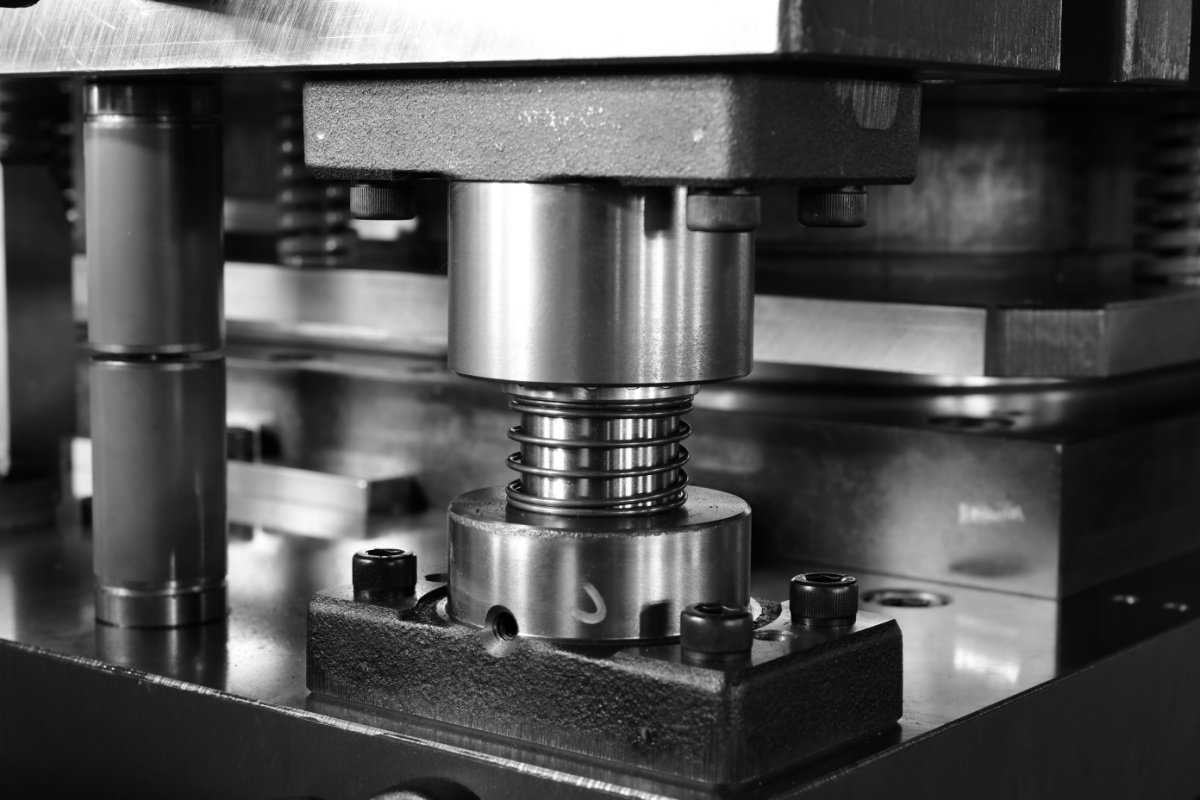





Wave springs and traditional coil springs both generate axial compression force, but they do so in different ways. A wave spring uses flat wire formed into a wave pattern to deliver comparable load characteristics in a significantly smaller installation height than a conventional round-wire coil spring. Neither design is inherently better; the right choice depends on the available space, force requirements, manufacturability and the intended application.
As medical devices continue to become smaller and more sophisticated, wave springs are becoming an increasingly attractive option for engineers seeking to maximise internal space without compromising mechanical performance. However, traditional coil springs remain the preferred solution for many applications due to their versatility, established manufacturing processes and broad operating range.
Wave spring vs. coil spring: what's the difference?
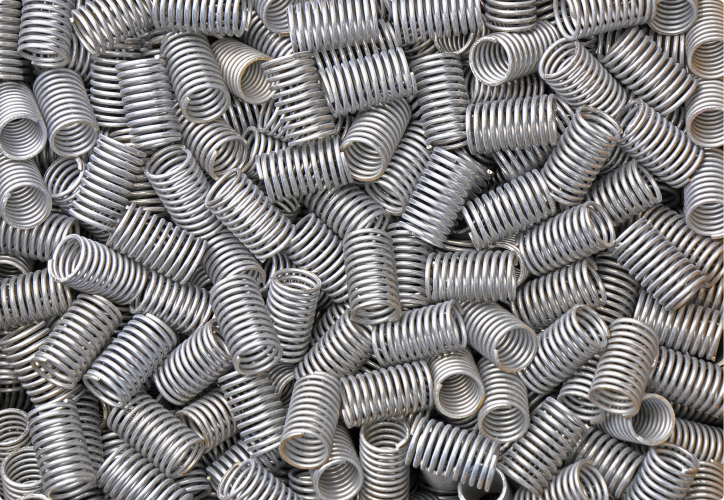
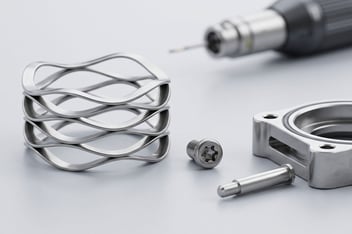
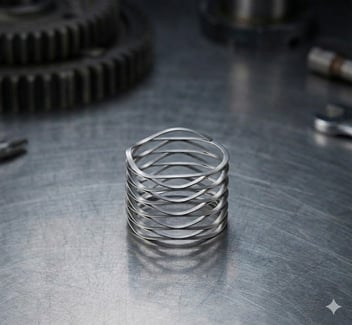
The fundamental difference lies in their geometry. A coil spring is manufactured from round wire wound into a helix, whereas a wave spring is manufactured from flat wire formed into a series of waves. Both operate under axial compression, but the wave profile allows the spring to achieve the required working load in a much shorter axial space.
| Feature | Wave spring | Traditional coil spring |
| Material | Flat wire | Round wire |
| Installation height | Lower | Higher |
| Force generation | Axial compression | Axial compression |
| Space efficiency | Excellent | Moderate |
| Design flexibility | High for compact devices | Suitable for a wider range of applications |
| Typical medical use cases | Autoinjectors, pen injectors, wearable devices (potentially) | General compression mechanisms, larger assemblies |
When should you choose a wave spring?
Wave springs are best suited to applications where installation height is the primary design constraint. Modern medical devices are increasingly designed around miniaturisation. Drug delivery devices, wearable technologies and handheld diagnostic equipment all compete for limited internal space, making every millimetre valuable.
By reducing the height required for the spring cavity, wave springs allow engineers to either shrink the overall device or allocate space to additional components such as sensors, electronics or structural features. Wave springs can also offer several manufacturing advantages, including:
- Consistent and predictable compression characteristics
- Reduced risk of tangling during automated assembly
- Potential material and weight savings when integrated into a purpose-designed assembly
These advantages make them particularly attractive for high-volume medical devices where repeatability and efficient assembly are critical.
When is a traditional coil spring the better choice?
Traditional coil springs remain the preferred solution for many designs because they are highly versatile and well understood.
Where installation height is less restrictive, a conventional coil spring often provides an effective and economical solution. Coil springs are available across an extensive range of sizes, spring rates and materials, making them suitable for countless compression applications.
They also provide greater flexibility when designers require larger working deflections or where compact packaging is not the primary objective. For many medical devices, a coil spring continues to deliver exactly the performance required without introducing unnecessary design changes.
Can a wave spring replace a coil spring?
Not usually without redesign. Although wave springs and coil springs perform similar mechanical functions, they are not direct replacements for one another. Wave springs require different cavity dimensions and are typically designed into a device from the earliest stages of development.
Attempting to substitute a coil spring with a wave spring late in the design process can create issues with tolerances, load characteristics and assembly. Instead, engineers should evaluate both spring types during concept development to determine which best supports the overall device architecture.
Which spring is best for medical devices?
The best spring is the one that meets the application's functional and manufacturing requirements. Medical device engineers rarely choose a spring based on force output alone. Corrosion resistance, long-term relaxation, manufacturability, automation, validation and repeatability all influence whether a design will perform reliably throughout its intended life.
As specialist spring manufacturers often observe, many development challenges stem from designing the available space before understanding the spring requirements. Involving an experienced manufacturing partner early allows designers to optimise both the spring and the surrounding assembly, reducing development risk while improving manufacturability.
Designing the right spring from the outset
Choosing between a wave spring and a traditional coil spring is rarely about selecting the "better" technology. Instead, it is about identifying the spring that best supports the performance, size and manufacturability requirements of the finished device.
At Advanex Medical, we work alongside medical device designers to optimise spring selection, component integration and design for manufacture from the earliest stages of development. By combining precision manufacturing with specialist engineering expertise, we help reduce development risk, improve manufacturing repeatability and support a smoother path towards regulatory approval and volume production.
To find out more about how we can enhance your manufacturing processes, download our guide below.



.jpg?width=352&name=shutterstock_1051333151%20(1).jpg)