Deburring improves the surface finish of medical metal pressings by removing the sharp, raised edges a press tool leaves behind when it cuts metal, along with the loose fragments attached to them. The result is a smoother, cleaner component that is less likely to shed particulates, crack under load, snag in automated assembly or fail cleanliness validation. For pressings used in drug delivery devices, choosing the right deburring method, from vibratory finishing to electropolishing and laser deburring, is as much a compliance decision as a cosmetic one.
What causes burrs on metal pressings?
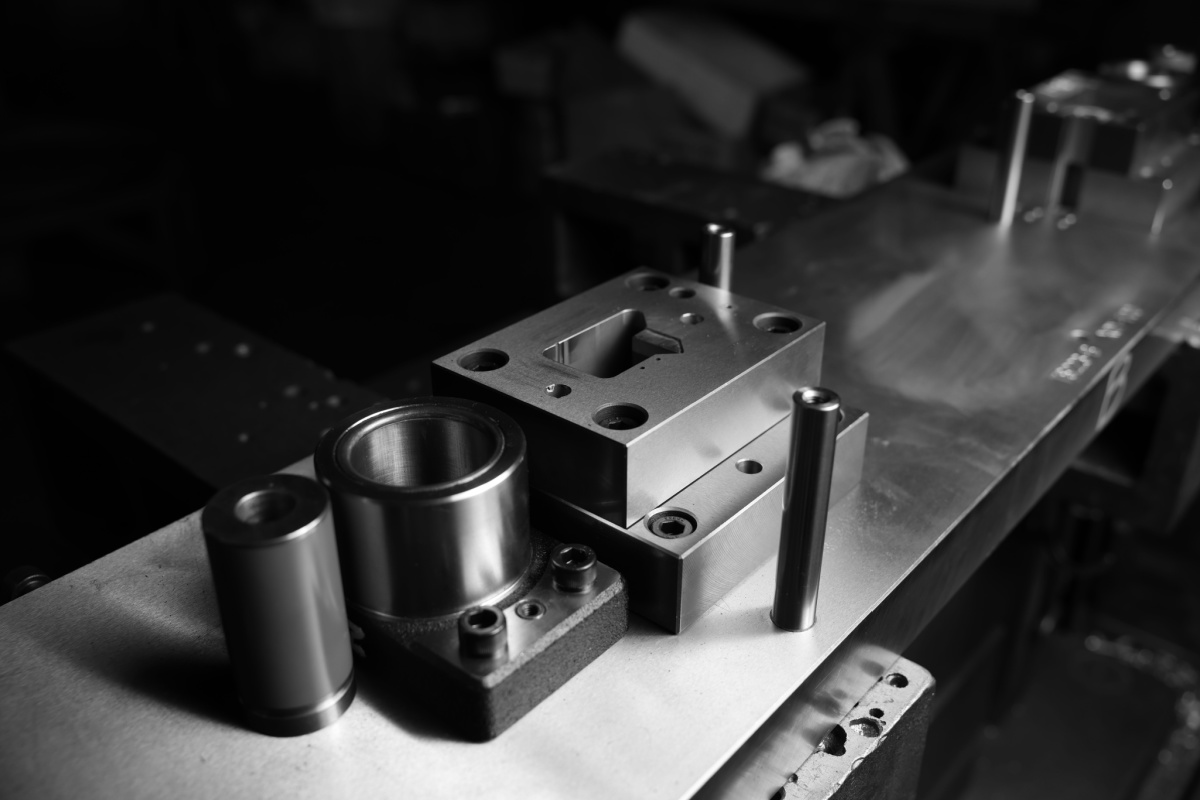
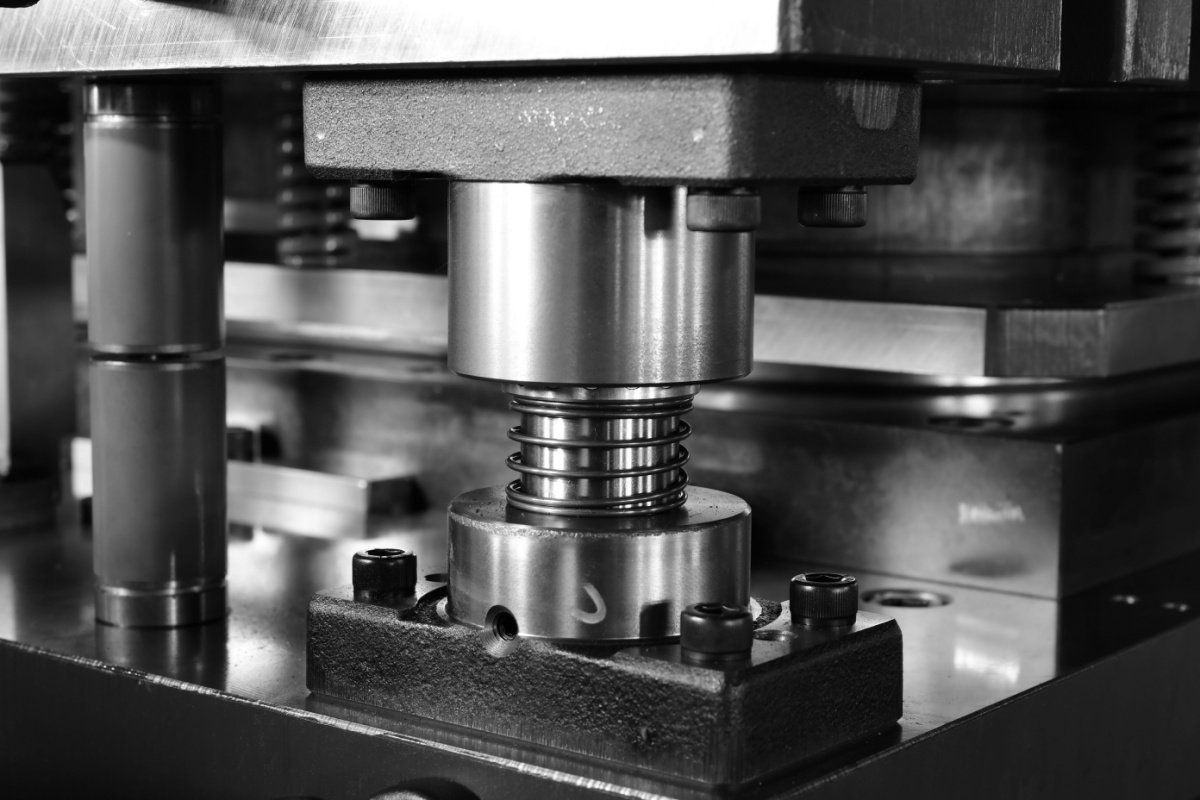
Burrs form when a punch shears through a metal strip and the final fracture leaves a thin lip of material along the cut edge. They are an unavoidable by-product of blanking, piercing and trimming, but their size can be controlled.
According to AHSS Insights, conventional pressing practice targets a burr height below 10% of material thickness, and in mild steels burr height grows steadily as die clearance increases and tooling wears. Good tool control reduces finishing, but rarely removes the need for it.
Why do burrs matter in medical metal pressings?
Burrs matter because they are both a contamination risk and a mechanical weak point. A loosely attached burr can break away during assembly or use and become a particulate inside a device. Burrs also concentrate stress: AHSS Insights notes that greater burr height brings additional cold working and creates stress risers that can lead to splitting. In the thin spring arms and contacts explored in our article on designing metal pressings for thinness, strength and precision, that can mean shorter fatigue life.
Regulation raises the stakes further. Annex I, Section 10 of the EU MDR requires devices to be designed and manufactured to minimise the risk posed by contaminants and residues, and names surface properties and “processing residues” as areas needing particular attention. Component cleanliness is commonly verified using methods such as ASTM F2459, which extracts residue from medical components and quantifies it gravimetrically.
Which deburring methods are used for medical metal pressings?
The most common deburring methods for medical metal pressings are vibratory finishing, electropolishing and laser deburring, each suited to different geometries, materials and volumes.
| Method | How it works | Best suited to | Key consideration |
| Vibratory (mass) finishing | Parts are agitated with abrasive media, rounding edges and removing burrs | Robust parts in high volumes | Thin parts can bend or tangle; media residue must be cleaned off |
| Electropolishing | An electrochemical process dissolves a thin surface layer, removing burrs and peaks first | Stainless steel parts needing a smooth, cleanable surface | Removes material from every exposed surface |
| Laser deburring | A focused laser removes burrs from specific edges | Thin, miniature or delicate features; in-line processes | Localised, so each edge must be programmed and validated |
How does electropolishing improve surface finish?
Electropolishing improves surface finish by smoothing microscopic peaks across the whole part, not just removing burrs at the edges. As Orthopedic Design & Technology explains, it dissolves burrs from all surfaces simultaneously and typically improves surface roughness (Ra) by around 50%, taking a 16Ra finish to 8Ra, for example.
On stainless steels it also leaves a chromium-rich passive layer that resists corrosion and is easier to clean, which is why it is often specified for parts that contact drugs or patients. Because material is removed evenly from every exposed surface, tolerances on critical features must allow for it at the design stage.
When is laser deburring the better choice?
Laser deburring is often the better choice for thin, miniature or delicate parts that mass finishing would distort. Advanex Medical faced exactly this on a leading drug dose counter, where conventional media deburring risked distorting a thin functional wire form. Introducing in-line laser deburring into the automated production line prevented particulates without compromising the part's geometry.
How should engineers specify edge finish on a drawing?
Engineers should define edge condition explicitly on the drawing, so deburring requirements are agreed before tooling is built. ISO 13715 provides a standard way to indicate permissible burr size and direction. It is worth agreeing early:
-
Maximum burr height, and which edges it applies to
-
Burr direction where it affects function or assembly
-
Required surface roughness (Ra) on functional surfaces
-
Cleanliness acceptance criteria and test method
-
Any dimensional allowance needed for electropolishing
Getting surface finish right from the start
Deburring improves the surface finish, cleanliness and fatigue resistance of medical metal pressings, but the right method depends on geometry, material and volume, and is best decided at the design stage.
Advanex Medical has decades of experience industrialising metal pressings and stampings for high-volume medical device manufacturers, from blanking and coining to vibro-deburring and laser processes, produced in ISO-accredited cleanrooms.